

Tax benefits of renting in 2025: what your company needs to know
Discover the tax benefits of renting in 2025 and how to take advantage of them to optimize your company's technology expenses in Mexico.
The new law of 2025 brings key tax advantages for companies that choose technology rental. We explain how to make the most of them.
In 2025, many Mexican companies will be able to optimize their operating expenses thanks to the tax benefits associated with the rental (leasing) of technology such as laptops, printers, and office equipment. With the tax reform in effect this year, the rental model takes on a new prominence as a flexible, deductible, and efficient alternative.
💼 At DITESA, we offer technology rental solutions that adapt to your business's new tax and operational needs.
💸 Why is renting tax-attractive in 2025?
The Ministry of Finance has updated the deductibility conditions for certain operating expenses, including the leasing of equipment. This means:
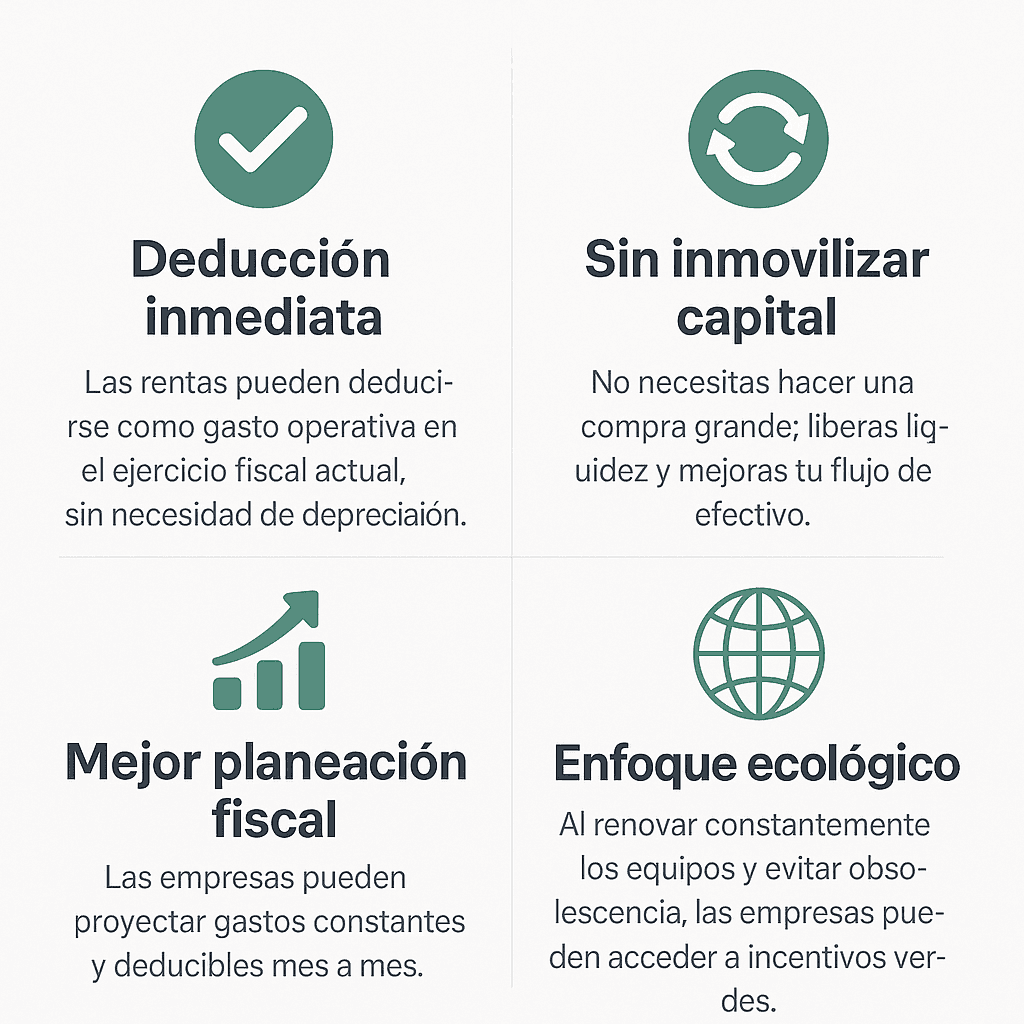
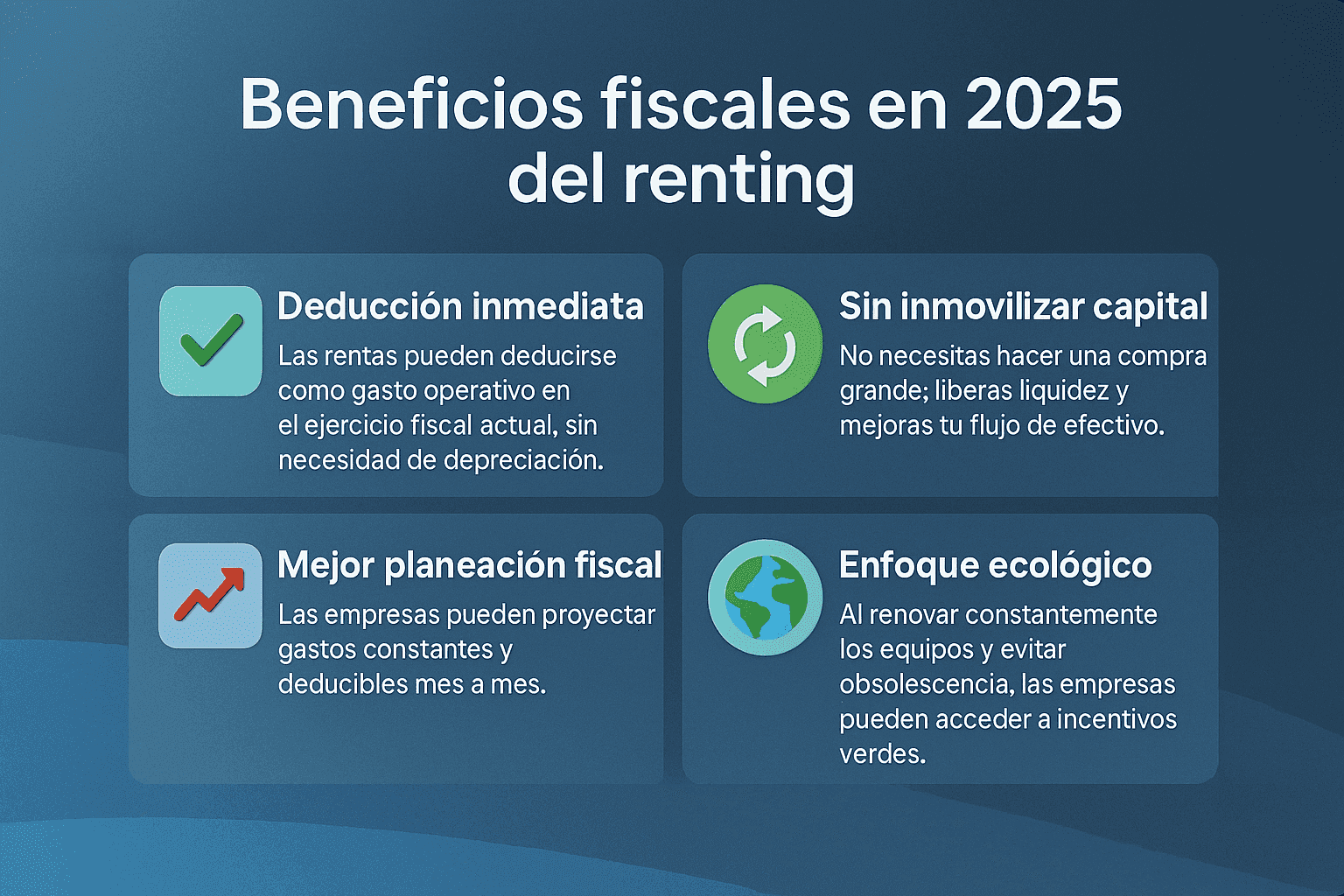
✅ Immediate deduction: Rentals can be deducted as operational expenses in the current fiscal year, without the need for depreciation.
♻️ No capital immobilization: You don’t need to make a large purchase; you free up liquidity and improve your cash flow.
📈 Better tax planning: Companies can project constant and deductible expenses month to month.
🌍 Ecological approach: By constantly renewing equipment and avoiding obsolescence, companies can access green incentives.
Additionally, the administrative burden is reduced by eliminating the need to register the asset as a fixed asset.
👉 You can consult Article 31 Section I of the Income Tax Law, which establishes the authorized deductions for legal entities.
📆 What changes did the new tax law of 2025 bring?
Some key points of the reform:
100% deduction for leasing contracts of up to 36 months, provided that the equipment is used exclusively for business activities.
No need for registration as a fixed asset, which simplifies accounting.
Greater control for SAT: Clarity in contracts and invoicing is required, but it provides clear advantages in return.
Compatibility with additional benefits, such as incentives for companies investing in digitalization and energy efficiency.
Benefit for SMEs: SAT has launched a new simplified scheme for companies with annual revenues below 5 million pesos that use renting as a tool for investing in technology.
📚 You can read more about tax benefits and incentives on the SAT portal and in the 2025 tax miscellaneous.
📊 How much can you really deduct?
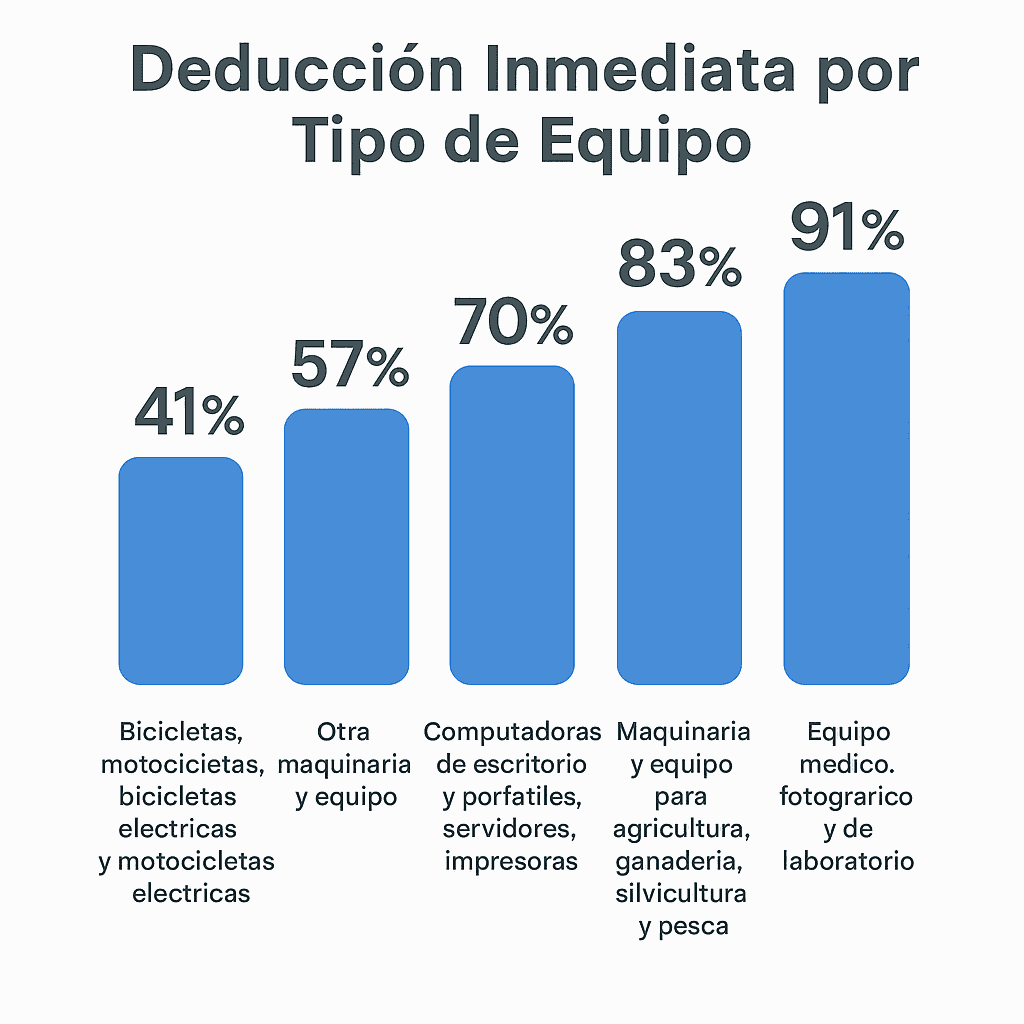
According to analyses by Creel Abogados and Foley & Lardner LLP, the deduction percentages by equipment type can range from 41% to 91% depending on the sector, the type of leased technology, and the company's line of business.
Below is a sample graph:
Type of equipment | Estimated deduction percentage |
|---|---|
Work laptops | 85% |
Servers | 91% |
Tablets or mobile devices | 76% |
Screens or peripherals | 41% |
🧾 Simple numerical example
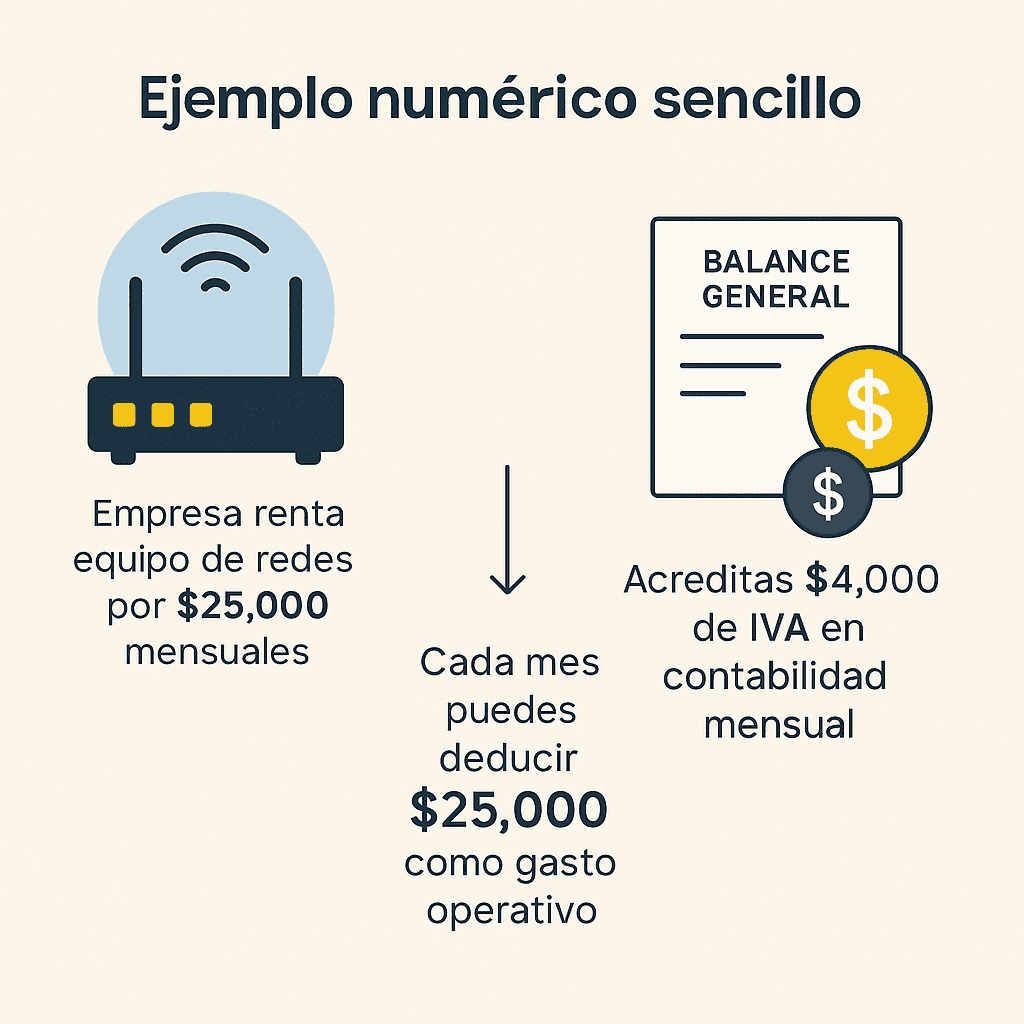
Let’s suppose your company rents networking equipment for $25,000 monthly + VAT ($4,000).
You can deduct $25,000 as an operational expense each month.
You can credit the VAT in your monthly accounting.
This generates a combined tax efficiency that improves your net profit and cash flow, making your company’s operations more profitable.
🔄 What is the difference between renting and leasing?
Feature | Renting (Operating lease) | Leasing (Financial lease) |
Accounting registration | Not registered as an asset or debt | Can be registered as an asset and debt |
Purchase intention | No | Yes, with an option to buy at the end |
Tax impact | 100% deductible as an operational expense | Can be partially deducted (depreciation) |
Renewal flexibility | High | Low |
Renting is more advantageous for companies that want to maintain flexibility and liquidity without compromising their balance sheet.
🚀 And what if you combine this with operational efficiency?
Companies that rent technology equipment:
Update their technology inventory more frequently
Reduce operational failures due to obsolescence
Gain flexibility to grow without compromising fixed capital
Additionally, many providers like DITESA offer plans with included support, renewal, and initial setup.
💼 Practical cases: how Mexican companies are taking advantage of renting
🏢 Logistics startup: Rents laptops and cell phones for its operational team. Reduces costs, deducts taxes, and always has updated equipment.
🎓 Private school: Opted for renting multifunction printers. Improves efficiency and deducts 100% of the annual expense.
🏦 Law firm: Rents PCs and scanners. Avoid obsolescence, deducts monthly, and has included support.
🧑💻 Digital marketing agency: Equips designers and editors with the latest MacBooks without compromising its cash flow.
📊 How to know if renting is right for you?
Before investing, many companies compare:
The monthly cost vs. annual depreciation and maintenance.
The accounting burden of acquiring a fixed asset vs. the simplicity of operational expense.
The ease of technological updating with renting.
💡 If your company changes equipment every 2–3 years, renting gives you total flexibility.
🤝 How to take advantage of these benefits with DITESA?
DITESA helps you implement a rental model adapted to current tax conditions. Our process includes:
Needs assessment.
Personalized advice.
Flexible and clear contract.
Equipment with support, maintenance, and replacement.
All with monthly invoicing, ideal for your company's accounting.
🔹 Conclusion
Renting is not only practical: in 2025 it is also strategic. Taking advantage of current tax benefits can help you optimize your budget, access better technology, and focus on what matters: growing your company.
📍 If you want to start renting today, contact us via WhatsApp!
🔗 Sources



Ideas and Knowledge
Explore articles with ideas, trends, and practical learnings about technology, innovation, and digital growth.